
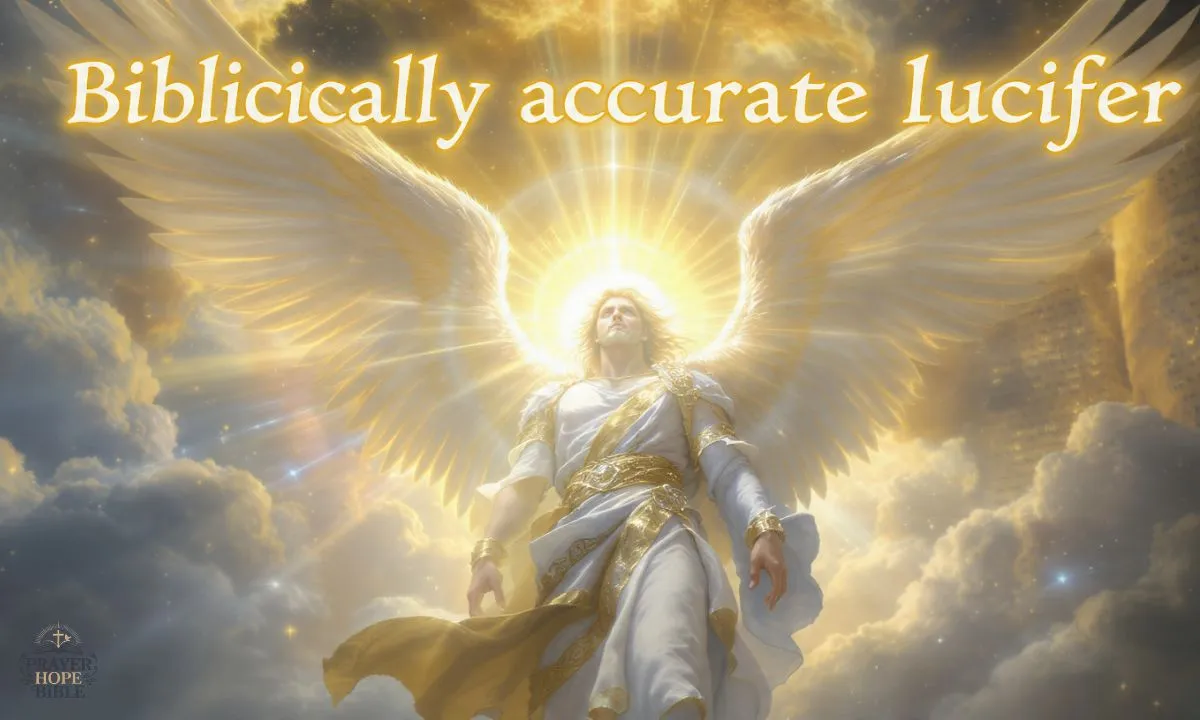
Most people think they know Lucifer. But what the Bible actually says might surprise you. There is a lot of misunderstanding surrounding this name — and most of it comes from tradition, not scripture.
What if everything you believed about him was built on a mistranslation? What if the truth is far more complex — and far more fascinating — than any movie or story ever told you? The real story hidden inside the Bible is one most people never get to hear.
Centuries ago, the prophet Isaiah wrote about a being cast down from heaven. Ezekiel described a figure of breathtaking beauty and power who chose pride over purpose. This is the story of a fallen angel — and it begins long before the world as we know it ever existed.
Biblically Accurate Understanding of Lucifer’s Identity
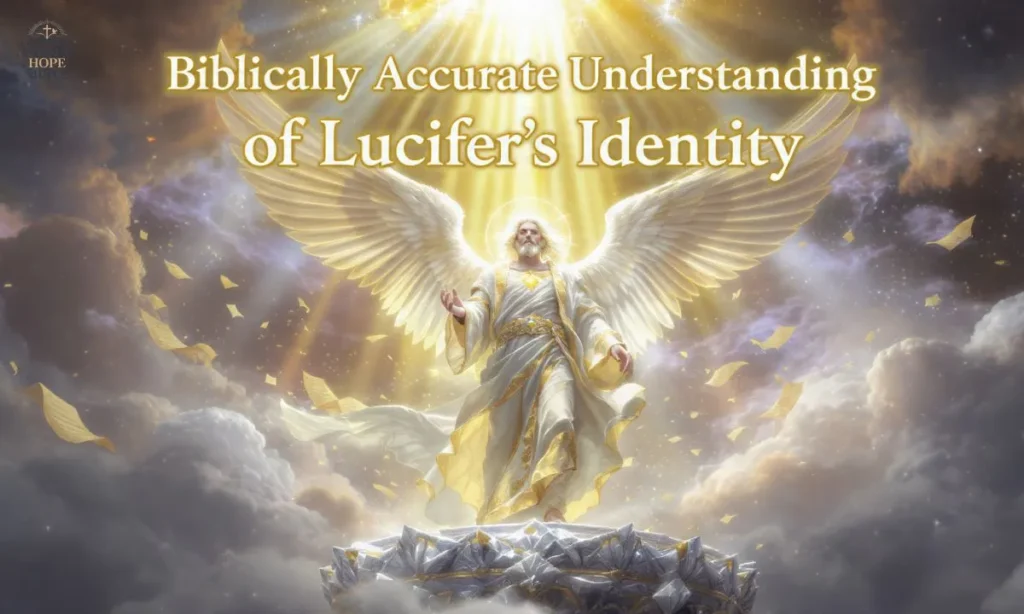
The Bible never describes Lucifer as a red-horned monster. It describes something far more unsettling — a being of light, beauty, and terrifying power whose true identity has been hidden in plain sight all along.
Common Misconceptions About Lucifer in Modern Culture
Modern culture has completely reshaped the image of Lucifer. What most people believe today comes from movies, mythology, and tradition — not from the Bible. The gap between pop culture and scripture is wider than most people realize.
- Lucifer is not described as red or horned anywhere in the Bible
- The name “Satan” and “Lucifer” are used interchangeably in culture, but the Bible treats them differently
- Most people picture a ruler of hell, but the Bible never gives him that role
- The idea of Lucifer leading a rebellion with an army of angels is largely built on tradition, not direct scripture
- Hollywood has turned a complex biblical figure into a simple villain — and most people accepted it without question
Stripping away centuries of myth reveals something unexpected. The biblical truth about Lucifer is not what religion or entertainment taught you. And once you see it clearly, you cannot unsee it.
What Scripture Actually Reveals About Lucifer
The word Lucifer appears only once in the entire Bible. Most people don’t know that. It shows up in Isaiah 14:12 — and it was never meant to be a name. It was a description of something far greater than we imagine.
Scripture doesn’t describe a monster in red. It describes a being of breathtaking beauty and heavenly power who once stood closer to God than almost anyone else. That is what makes his fall so devastating — and his story so impossible to ignore.
The Hebrew Original: Helel and Its True Meaning
Isaiah 14:12 says — “How you have fallen from heaven, O morning star, son of the dawn.” This single verse holds the key to understanding the true identity of Lucifer. The original Hebrew word behind this verse is not “Lucifer” — it is “Helel.”
| Term | Language | Meaning |
| Helel | Hebrew | Shining One / Bright One |
| Lucifer | Latin | Light Bearer / Morning Star |
| Morning Star | English Translation | A star that shines before dawn |
| Phosphoros | Greek | Light Bringer |
| Satan | Hebrew | Adversary / Accuser |
The truth is that Lucifer was never the original word. It entered the Bible through a Latin translation called the Vulgate. One translation changed everything — and the whole world built a belief system around it without ever questioning the original Hebrew.
Jerome’s Latin Vulgate and the Birth of ‘Lucifer’
Most people don’t know that the word Lucifer was created by a single man. Around 383 AD, a scholar named Jerome translated the Bible into Latin. That translation became known as the Vulgate.
When Jerome reached Isaiah 14:12, he translated “Helel” as “Lucifer” — simply meaning “Light Bearer” in Latin. It was never a name. It was a description that the world slowly turned into an identity.
“How you have fallen from heaven, O Lucifer, son of the morning.” — Isaiah 14:12. And as 2 Corinthians 11:14 warns us — Satan himself masquerades as an angel of light. One mistranslation. Centuries of misunderstanding. The truth was hiding in plain sight all along.
King James Translation and English Christian Tradition
“How art thou fallen from heaven, O Lucifer, son of the morning.” — Isaiah 14:12 (KJV). The King James Bible was completed in 1611 — and it kept the Latin word Lucifer instead of translating the original Hebrew. That one decision shaped English Christian tradition for over 400 years.
| Bible Version | Year | Translation of Helel |
| Hebrew Original | Ancient | Helel — Shining One |
| Latin Vulgate | 383 AD | Lucifer — Light Bearer |
| King James Version | 1611 | Lucifer — kept as a name |
| NIV Bible | 1978 | Morning Star |
| ESV Bible | 2001 | Day Star |
| NLT Bible | 1996 | Shining Star |
What started as a Latin description became a permanent name in the English-speaking world. Most modern Bible translations have now corrected it — replacing Lucifer with Morning Star or Day Star. But for millions of people, the damage was already done — the myth had already taken root.
Biblically Accurate Description of Lucifer’s Appearance
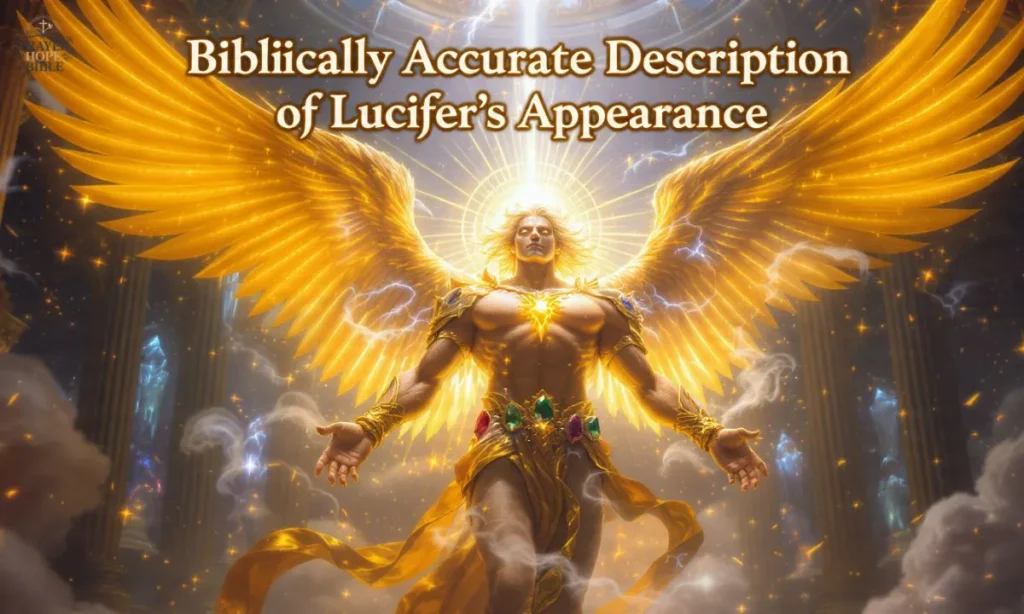
The Bible never describes Lucifer as dark or monstrous. It describes a being of breathtaking beauty and radiant light — so perfect in form that his very appearance reflected the glory of God himself.
Lucifer’s Pre-Fall Glory According to Ezekiel
“You were the seal of perfection, full of wisdom and perfect in beauty.” — Ezekiel 28:12. This verse was not written about a monster. It was written about a being so magnificent that even God described him as the very seal of perfection. That is the Lucifer the Bible actually reveals.
- He was perfect in beauty — unlike any other created being
- He was filled with wisdom beyond measure
- He lived in the Garden of Eden among the most holy places
- He was covered in nine precious stones — ruby, topaz, diamond, and more
- He walked on the holy mountain of God
- He moved among the stones of fire — a place of divine glory
- He was anointed — specially chosen and set apart by God himself
This was not a creature of darkness. This was God’s most glorious creation — a being of light, wisdom, and heavenly beauty. Understanding what he once was makes his fall not just a story of evil — but a deeply haunting tale of pride destroying something truly magnificent.
The Morning Star Imagery in Isaiah’s Prophecy
“How you have fallen from heaven, O Morning Star, son of the dawn.” — Isaiah 14:12. The Morning Star is the brightest light in the sky before sunrise. Lucifer once held that title — and losing it was the greatest fall in all of creation.
- The Morning Star symbolized beauty, power, and the highest heavenly position
- Lucifer’s fall is pictured as a bright star being violently cast down from heaven
- His pride made him believe he could rise above God himself
- The same title is later given to Jesus Christ in Revelation 22:16 — the ultimate transfer of glory
What Lucifer lost through pride, Jesus reclaimed through humility. That contrast is at the very heart of the biblical story — and it is far more powerful than any myth ever told.
Does Lucifer Possess Physical Form After His Fall
“Your pomp is brought down to Sheol, the sound of your harps; maggots are spread beneath you and worms cover you.” — Isaiah 14:11. After his fall, the Bible paints a very different picture of Lucifer. The glory and beauty he once carried were stripped away the moment pride replaced purpose.
The Bible does not clearly confirm whether Lucifer has a physical form after his fall. What it does suggest is that he operates as a spiritual being — moving, deceiving, and influencing without a fixed body. He is described as a roaring lion, a serpent, and an angel of light — never as a single physical form.
| Description in Bible | Scripture Reference | What It Suggests |
| Roaring Lion | 1 Peter 5:8 | A predator — always hunting |
| Angel of Light | 2 Corinthians 11:14 | Can appear beautiful and deceptive |
| Ancient Serpent | Revelation 12:9 | Cunning and spiritually dangerous |
| Prince of the Air | Ephesians 2:2 | A spiritual, unseen presence |
| Dragon | Revelation 12:3 | Immense power and authority |
The Bible uses many images to describe Lucifer — but none of them are physical in the way humans understand. He is a spiritual force — and that makes him far more dangerous than any creature with a body. You cannot fight what you cannot see.
What Biblical Silence Tells Us Lucifer Is Not
Sometimes the most powerful truth is found in what the Bible does not say. The scripture never once describes Lucifer the way culture and tradition have painted him. That silence is not an accident — it is a correction waiting to be heard.
- The Bible never describes him as red or having horns
- He is never called the ruler or king of hell
- He is never shown carrying a pitchfork or living in flames
- The Bible never says he controls hell — he is actually destined to be punished there
- He is never portrayed as the opposite or equal of God
The image most people carry of Lucifer was painted by culture — not scripture. The Bible’s silence on these details is itself a powerful message. Stop believing the myth — and start reading the truth.
Critical Distinction Between Lucifer and Satan in Scripture
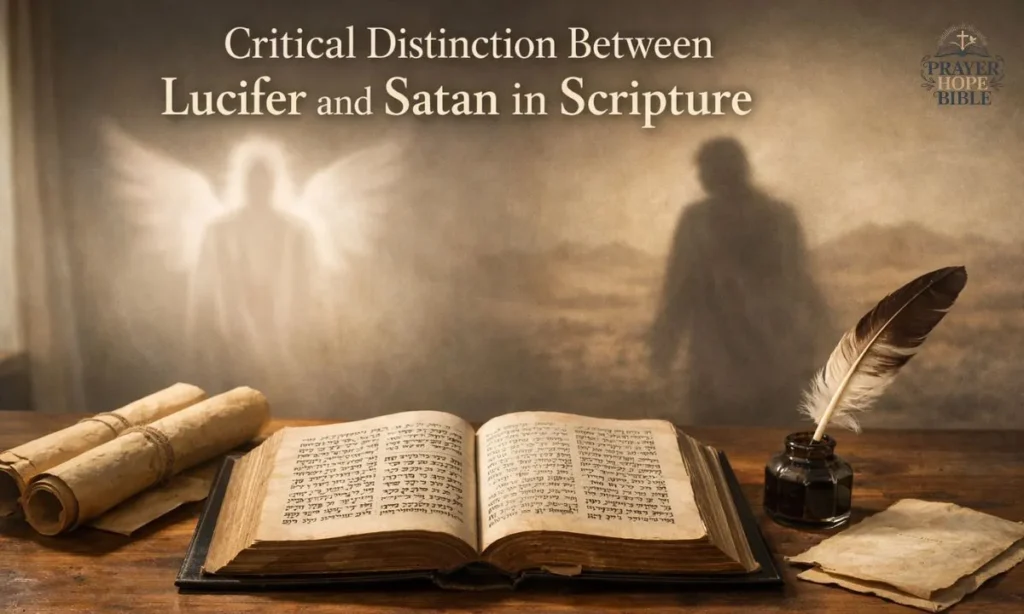
Most people use Lucifer and Satan as the same name — but the Bible never does that. Lucifer describes what he was before the fall — and Satan describes what he became after it.
Biblical Evidence Supporting Their Distinction
“How you have fallen from heaven, O Morning Star.” — Isaiah 14:12. This verse describes Lucifer — a being of light and glory. But Job 1:6 shows us Satan — an accuser standing before God to attack an innocent man. Same being. Completely different identity. The fall changed everything.
| Attribute | Lucifer | Satan |
| Meaning of Name | Light Bearer / Morning Star | Adversary / Accuser |
| Nature | Beautiful / Glorious / Perfect | Deceptive / Destructive / Corrupt |
| Biblical Context | Isaiah 14 / Ezekiel 28 | Job 1 / Revelation 12 |
| Role | Anointed Covering Angel | Accuser / Tempter / Deceiver |
| Time Period | Before the Fall | After the Fall |
| Symbol Used | Morning Star | Serpent / Dragon / Roaring Lion |
The Bible uses two very different pictures for a reason. Lucifer represents the glory of what was created. Satan represents the ruin of what was chosen. Understanding that difference is not just interesting — it is essential to understanding the full biblical truth.
Don’t Miss: Biblically Accurate Demon
How Christian Tradition Merged These Figures
For centuries, Christian tradition slowly blended Lucifer and Satan into one single figure. It did not happen overnight. It happened through sermons, paintings, poems, and theological writings that built on each other over hundreds of years.
By the time the Middle Ages arrived, the merging was almost complete. Church teachers and theologians began using both names interchangeably without questioning the original scripture. The Bible never made that connection directly — but tradition did it anyway.
The most powerful influence came from works like Dante’s Inferno and Milton’s Paradise Lost. These were works of literature — not scripture. But millions of people absorbed them as if they were biblical truth. And slowly, the myth became more familiar than the Bible itself.
Protestant Reformers’ Rejection of the Equation
When the Protestant Reformation began in the 1500s, some reformers started questioning what the Church had taught for centuries. They went back to the original Hebrew and Greek texts — and what they found did not always match tradition. The cracks in the Lucifer-Satan equation began to show.
Martin Luther himself raised early doubts about how Isaiah 14 had been interpreted. He believed the passage was primarily a political prophecy against the King of Babylon — not a direct description of a fallen angel. That was a significant departure from what most of the Church had accepted for hundreds of years.
Other reformers followed a similar path — questioning traditions that lacked strong biblical foundation. They did not all agree. But they cracked open a door that had been shut for centuries — and the question finally had to be asked out loud.
Why This Theological Distinction Matters Today
Understanding the difference between Lucifer and Satan is not just a historical debate. It directly affects how people read and understand their Bible. When tradition replaces scripture, the whole foundation of belief begins to shift without anyone noticing.
Getting this distinction right also changes how people understand evil, pride, and spiritual danger. The biblical truth is not just about a name — it is about recognizing how corruption enters something beautiful and destroys it from within. That lesson is just as relevant today as it was thousands of years ago.
Biblically Accurate Account of Lucifer’s Fall and Significance
The fall of Lucifer is not just an old religious story. It is the most powerful warning in all of scripture — showing exactly what pride, ambition, and the rejection of God can do to even the most glorious of created beings.
The Narrative of the Fallen Angel in Scripture
“I saw Satan fall like lightning from heaven.” — Luke 10:18. These words came directly from Jesus himself. The fall of the fallen angel is not a myth or a legend — it is confirmed across multiple books of the Bible. From Isaiah to Ezekiel to Revelation, the same story echoes through all of scripture.
| Scripture | What It Reveals |
| Isaiah 14:12 | His fall from heaven described as a falling Morning Star |
| Ezekiel 28:15-17 | Pride and beauty led to his corruption and casting out |
| Luke 10:18 | Jesus confirms seeing him fall like lightning from heaven |
| Revelation 12:7-9 | A war in heaven — he was cast down with his angels |
| Job 1:6 | He still had access to God’s presence after his fall |
| 2 Peter 2:4 | Fallen angels were cast into darkness and held for judgment |
The Bible tells this story not to glorify the fallen angel — but to warn us. Every step of his fall was driven by a choice. And every choice had a consequence. That is the real message hidden inside the most dramatic story in all of scripture.
Lucifer’s Five ‘I Will’ Declarations of Pride
Isaiah 14:13-14 records the most dangerous words ever spoken in heaven. Five times, Lucifer said “I will” — and each declaration was a direct act of rebellion against God. These were not random thoughts. They were a deliberate choice to place themselves above the Creator.
- “I will ascend to heaven“ — he wanted to leave his appointed position
- “I will raise my throne above the stars of God“ — he wanted authority over other angels
- “I will sit on the mount of the congregation“ — he wanted worship reserved only for God
- “I will ascend above the heights of the clouds“ — he wanted to surpass God’s glory
- “I will make myself like the Most High“ — the ultimate act of pride and rebellion
Five declarations. Five acts of pride. And every single one was answered with a fall. The lesson scripture is teaching here is painfully clear — the moment any created being puts self before God, destruction is already on its way.
The Nature of Sin: Pride in God-Given Perfection
Lucifer did not fall because he was weak or broken. He fell because he was perfect — and he knew it. Pride entered the moment he shifted his eyes from the Creator to himself. That is what makes his story so deeply haunting.
Ezekiel 28:17 says it plainly — “Your heart became proud on account of your beauty.” The very gifts God gave him became the source of his destruction. That is the real warning buried inside his story — pride does not grow in emptiness. It grows in greatness.
Catastrophic Consequences of Angelic Rebellion
The moment Lucifer chose pride over purpose, the consequences were immediate and eternal. He was not given a second chance or a warning. God cast him out of heaven with a swiftness that showed just how seriously rebellion is taken in the spiritual realm.
The damage did not stop with Lucifer alone. Revelation 12:4 suggests that a third of all angels fell with him — drawn into his rebellion and sharing in his punishment. One act of pride did not just destroy a single being. It shattered an entire portion of God’s creation forever.
The Scope of Rebellion: One-Third of Angels
Revelation 12:4 gives us a number that is almost impossible to fully grasp. It says the dragon swept away a third of the stars of heaven — widely understood to represent a third of all angels. That means Lucifer’s rebellion was not a small uprising. It was a massive spiritual catastrophe.
Think about what that means. Heaven lost an enormous portion of its angelic host in a single act of rebellion. These were not weak or confused beings — they were powerful, glorious creatures who chose to follow Lucifer knowing exactly what they were doing. The scale of that fall is something the human mind can barely begin to comprehend.
Artistic Evolution of Lucifer’s Image Throughout History
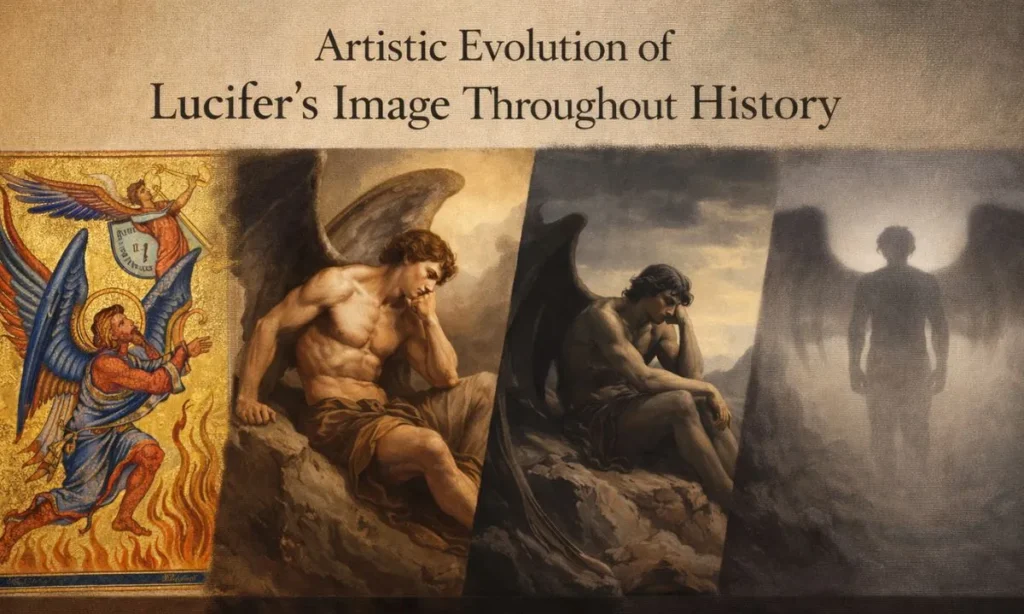
The Lucifer most people picture today was not drawn from the Bible — he was drawn from paintings, poems, and imagination. Over centuries, artists and writers slowly replaced the biblical truth with an image that was far more dramatic — and far less accurate.
Early Medieval Period: The Ethereal Blue Angel
In the Early Medieval Period, artistic depictions of Lucifer looked nothing like what we see today. He was often painted as a blue or pale angel — still carrying traces of his heavenly origin. Artists of that era stayed closer to the biblical description of a being made of light and beauty.
These early images reflected a deeper theological understanding. Lucifer was not yet the red-horned monster of later centuries. He was portrayed as something far more unsettling — a glorious being who had made a terrible choice. That version was actually far closer to the biblical truth than anything that came after.
High Medieval Transformation to Grotesque Forms
As the Middle Ages progressed, the image of Lucifer began to change dramatically. Church authorities and artists started portraying him as a grotesque, monstrous creature — with horns, claws, and terrifying deformities. The goal was to make evil look repulsive so that people would fear and avoid it.
By the High Medieval Period, the biblical description had almost completely disappeared from art. Dante’s Inferno cemented this transformation — depicting Lucifer as a giant, frozen, three-headed monster trapped at the center of hell. It was powerful imagery — but it had almost nothing to do with what the Bible actually says.
Renaissance Romanticization: Milton’s Tragic Rebel
The Renaissance brought a completely new version of Lucifer to the world. Artists and writers began moving away from the grotesque monster of the Middle Ages. Instead, they started painting him as something far more dangerous — a beautiful, tragic, and almost sympathetic figure.
The biggest shift came from John Milton’s epic poem Paradise Lost, written in 1667. Milton portrayed Lucifer as a complex rebel — proud, passionate, and almost heroic in his defiance. His famous line “Better to reign in hell than serve in heaven“ captured an entire generation’s imagination and never let go.
The problem was that Milton’s Lucifer was a work of literary genius — not biblical accuracy. But millions of readers absorbed it as if it were scripture. That romanticized image of a tragic rebel quietly replaced the biblical truth in the minds of countless people — and its influence is still felt in art, film, and culture to this very day.
Victorian Era Through Modern: The Theatrical Red Devil
The Victorian Era took the romanticized image and pushed it further. Lucifer began appearing in theatre and art as a red-skinned, horned figure carrying a pitchfork. It was dramatic and memorable — but almost entirely fictional.
Much of this imagery was actually borrowed from pagan mythology — not the Bible. Artists blended ancient horned gods with loose biblical references and created something that felt religious but was rooted in pure imagination.
By the modern era, Hollywood took full control. Movies and TV shows turned Lucifer into everything from a terrifying villain to a charming antihero. With every passing decade, the gap between biblical truth and cultural myth grew wider and harder to close.
Contrasts Between Artistic and Biblical Portrayals
The Bible and art tell two completely different stories about Lucifer. One is rooted in scripture and truth — the other is built on tradition, imagination, and cultural influence. The contrast between the two is not small. It is enormous.
- The Bible describes beauty — art created a monster
- Scripture shows a being of light — culture painted him red
- The Bible never gives him horns — art made them his signature
- Scripture says he is destined for punishment in hell — culture made him the ruler of it
- The Bible warns he appears as an angel of light — art made him obviously terrifying
- Scripture focuses on his pride — art focused on his appearance
The danger of letting art replace scripture is that it makes evil easier to spot and easier to dismiss. When people picture a red-horned monster, they stop looking for the real Lucifer — the one the Bible actually warns about. The most dangerous deception never looks like a devil. It looks like light.
Theological Insights from a Biblically Accurate Lucifer
Understanding Lucifer through the lens of scripture alone unlocks something far deeper than a story about evil. It reveals the true nature of pride, free will, and what happens when a created being chooses self over God.
The Paradox of Created Perfection and Free Will
God created Lucifer perfect. That is what makes the story so deeply puzzling. If he was perfect — why did he fall? The answer lies in something God gave every created being — the freedom to choose.
Free will is not a flaw in God’s design. It is the most powerful gift ever given. But it also carries the greatest risk. Even a being of perfect beauty and heavenly wisdom could use that freedom to choose pride over purpose — and that is exactly what Lucifer did.
That is the real paradox at the heart of this story. Perfection did not protect him. Wisdom did not save him. Only humility and surrender to God could have — and he chose neither. That choice echoes through all of human history right up to this very day.
The Origin of Evil Within a Perfect Being
One of the deepest questions in all of theology is this — how did evil begin inside a being that God created perfect? The Bible points to one answer. Ezekiel 28:15 says — “You were blameless in your ways from the day you were created, till unrighteousness was found in you.” Evil did not come from outside Lucifer. It was born from within.
The origin of evil was not a mistake in God’s creation. It was a moment of choice. Lucifer looked at his own beauty, his own wisdom, his own glory — and decided it belonged to him rather than to God. That single internal shift from gratitude to pride was the moment evil entered a perfect being — and changed everything forever.
Pride’s Specific Temptation: Giftedness and Position
Lucifer was not tempted by poverty or weakness. He was tempted by his own giftedness. The very things God gave him — his beauty, his wisdom, his heavenly position — became the exact tools that pride used to destroy him. That is a warning that cuts far deeper than most people realize.
This is the specific danger of pride that the Bible highlights. It does not grow in people who have nothing. It grows in people who have been given much. The higher the position, the greater the gifting — the louder the whisper of pride becomes. Lucifer heard that whisper and chose to listen — and it cost him everything.
Cosmic Implications: Corrupting Others and Spiritual Warfare
Lucifer’s fall was never just personal. The moment he rebelled, he began pulling others into his rebellion. A third of all angels followed him — and then he turned his attention to humanity. His corruption did not stay in heaven. It spilled into every corner of God’s creation.
This is the reality of spiritual warfare that the Bible speaks about openly. Ephesians 6:12 says — “We do not wrestle against flesh and blood, but against principalities, against powers, against the rulers of the darkness.” The fall of Lucifer did not end a conflict — it started one. And according to scripture, that war is still being fought today.
Lessons for Humanity: Humility and Dependence on God
The story of Lucifer is ultimately a lesson written for humanity. If pride could destroy the most glorious being God ever created — it can destroy anyone. The Bible uses his fall as the ultimate warning against placing self above God in any area of life.
The antidote the scripture offers is simple but powerful — humility and total dependence on God. Proverbs 16:18 warns — “Pride goes before destruction, a haughty spirit before a fall.” Lucifer is the living proof of that verse. His story is not just ancient history — it is a mirror held up to every human heart.
Last Words
The story of Lucifer is one of the most misunderstood stories in all of scripture. Centuries of tradition, art, and culture buried the biblical truth under layers of myth. But the real story — found in Isaiah, Ezekiel, and Revelation — is far more powerful than anything Hollywood or history ever invented.
The greatest fall ever recorded was not caused by weakness. It was caused by pride inside perfection. That warning was never just about Lucifer — it was written for every human heart. And the Bible’s message is clear — choose humility, stay close to God, and never let your gifts become your god.

James has 4 years of experience writing blogs on Bible studies and prayer. Passionate about spreading hope and faith, he now contributes to prayerhopebible.com, offering insightful and inspiring content to guide individuals in their spiritual journey.
